2026-05-06 by UDIAG
Introduction
Searching for the best diagnosis machine for all cars seems straightforward—until you realize how complex modern vehicles have become. Today’s cars are no longer purely mechanical systems. They are software-driven machines powered by dozens of electronic control units (ECUs), advanced sensors, and constantly evolving communication protocols.
This complexity creates a common misconception: that one diagnostic tool can perfectly cover all vehicles in every situation. In reality, what matters is not whether a tool claims universal compatibility, but how effectively it handles real-world diagnostic challenges.
Understanding what truly defines a reliable car diagnostic tool is essential for workshops, technicians, and even experienced vehicle owners looking to make a smart investment.
The Myth of “One Tool for All Cars”
The idea of a single diagnostic machine working flawlessly across all vehicles is appealing, but it rarely reflects real workshop conditions. Different manufacturers use different communication protocols, software structures, and control strategies. Even within the same brand, diagnostic requirements can vary significantly between model years.
Modern vehicles may contain over 70 to 100 ECUs, each responsible for different systems such as powertrain, safety, and body electronics. A diagnostic tool must not only connect to these modules but also interpret data accurately and execute functions reliably.
This is why many professionals no longer focus solely on “coverage claims.” Instead, they evaluate how well a diagnostic platform performs across different scenarios, including fault detection, system communication, and software stability.
What Actually Defines the Best Diagnosis Machine
When evaluating the best diagnostic machine, the focus should shift from marketing claims to practical capabilities. A professional-grade diagnostic tool is defined by how it performs under real workshop conditions.
One of the most critical factors is full-system diagnostics, which allows technicians to scan and access all available control modules within a vehicle. This ensures that faults are not missed in less obvious systems such as body control or safety modules.
Equally important is data accuracy and stability. Inconsistent or delayed data can lead to misdiagnosis, especially when dealing with intermittent faults. Reliable tools provide stable communication and real-time data streams that technicians can trust.
Another key factor is software capability. As vehicles evolve, diagnostic tools must keep up with new models, updated protocols, and changing system architectures. Tools with regular software updates are far more valuable over time than those with strong hardware but limited update support.
Finally, advanced functions such as bidirectional control, service resets, and ECU coding play a major role. These features allow technicians not only to read faults but also to actively test components and complete repairs efficiently.
Key Capabilities That Matter in Real Diagnostics
Instead of focusing on brand names alone, it is more useful to evaluate diagnostic tools based on the capabilities they provide. The table below summarizes the functions that have the greatest impact on real-world diagnostics.
Essential Diagnostic Capabilities
| Function | Why It Matters in Practice |
|---|---|
| Full-System Diagnostics | Ensures complete vehicle coverage beyond engine systems |
| Live Data Stream | Helps detect intermittent and sensor-related issues |
| Bidirectional Control | Enables active testing of components |
| ECU Coding | Required for module replacement and system configuration |
| Service Functions | Supports routine maintenance operations |
| Software Updates | Keeps the tool compatible with new vehicle models |
These capabilities define how effective a diagnostic tool is in daily workshop operations, far more than simple compatibility lists.
Why Software Matters More Than Hardware
In the past, diagnostic tools were often evaluated based on hardware performance. Today, the situation has changed significantly. Modern diagnostics is largely driven by software—vehicle databases, communication protocols, and diagnostic algorithms.
A tool with strong hardware but outdated software quickly loses its value. On the other hand, a well-supported diagnostic platform with continuous updates can remain relevant for years.
Industry trends also show that the automotive diagnostic scan tool market is shifting toward software-driven ecosystems, where cloud data, remote updates, and expanding vehicle coverage play a central role.
For workshops, this means that choosing a diagnostic tool is not just a one-time purchase decision. It is an investment in a platform that must evolve alongside the vehicles being serviced.
Choosing the Right Diagnostic Tool for Your Needs
Selecting the right diagnostic tool depends largely on the type of work being performed. Independent workshops that service multiple vehicle brands require tools with broad coverage and stable performance across different systems. In contrast, specialized workshops may prioritize depth in specific brands or systems.
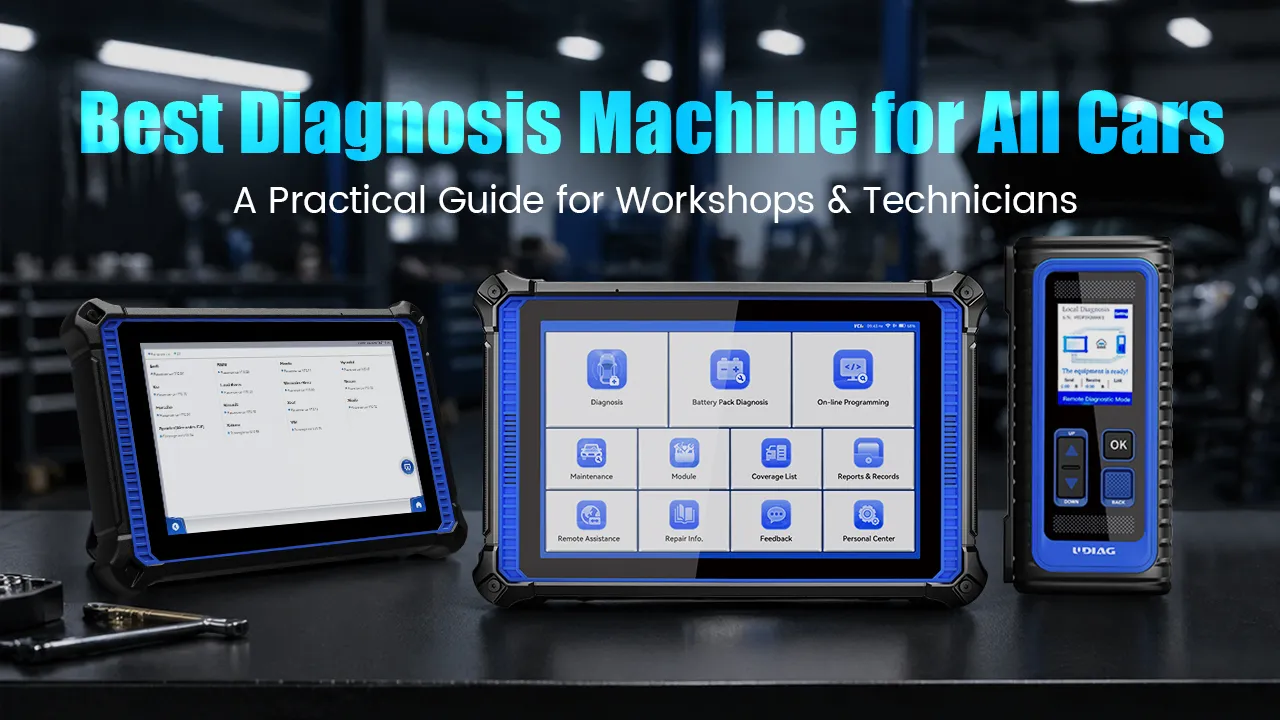
Modern diagnostic platforms, such as the UDIAG X-95 PRO professional diagnostic tablet, are designed to balance coverage, functionality, and usability. These tools integrate full-system diagnostics, live data analysis, and advanced service functions into a single platform, making them suitable for a wide range of workshop scenarios.
For readers exploring professional solutions, you can also review professional automotive scan tools and advanced car diagnostic platforms to better understand how different tools compare in real applications.
Conclusion
The search for the best diagnosis machine for all cars is ultimately not about finding a single perfect tool. Instead, it is about understanding what truly matters in modern automotive diagnostics.
Reliable communication, accurate data, strong software support, and practical diagnostic functions are the factors that determine real performance. Tools that excel in these areas are far more valuable than those that simply claim broad compatibility.
As vehicles continue to evolve, workshops that invest in capable diagnostic platforms will be better positioned to handle complex repairs, improve efficiency, and stay competitive in an increasingly technology-driven industry.