


UDIAG ADAS-A vs ADAS-B
Modern cars use cameras and radar to provide driver assistance. These systems need to be properly calibrated after any repair or component replacement. The right equipment is essential to enable the workshop to carry out the calibration correctly and efficiently.
The UDIAG ADAS-A versus ADAS-B comparison shows two very different approaches to professional ADAS calibration. ADAS-A is radar only, ADAS-B is radar and camera. The manufacturer’s product descriptions also state that ADAS-B has LiDAR calibration support.
This guide looks at their features, supported systems, accessories, workshop requirements and limitations and tells you which system might be the one for your garage.
What is the UDIAG ADAS-A Calibration System?
The UDIAG ADAS-A is a professional, three-in-one radar calibration system which assists the technician in the calibration of compatible ADAS systems following a qualifying repair. It’s a system which combines a number of radar calibration functions into a single bracket.
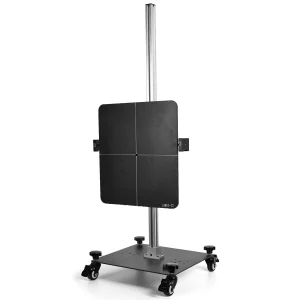


ADAS-A Calibration System
– All-in-One Calibration for ACC, BSM, LCA & FCR systems
– Wide Vehicle Coverage: Benz, BMW, Toyota, VW, BYD & more
– Simplified Setup with shared bracket design
– Modular Targets for flexible ADAS calibration
– Software-Guided, step-by-step operation
– Durable mobile frame with stable positioning
UDIAG ADAS-A vs ADAS-B: Understanding ADAS-A’s Main Features
According to UDIAG, ADAS-A incorporates the three key radar calibration functions.
- ACC radar reflector: Supports compatible ACC radar calibration.
- Conical radar target: Supports the specified radar calibration procedures which require this target.
- Doppler simulator: Supports applicable radar test and calibration procedures.
The shared bracket makes equipment positioning and target changes a doddle. Interchangeable configurations are available to allow the technician to deal with the different vehicle specific calibration requirements.
UDIAG shows support for ACC, BSM, LCA and FCR.
However the techs have to pick the right configuration for each vehicle. It’s all down to the vehicle model, the radar system and the procedure required.
Software Requirements for UDIAG ADAS-A
ADAS-A requires either activated ADAS software or a valid software licence. The diagnostic platform must be capable of the intended vehicle and calibration function. Workshops should confirm they have software access prior to buying the equipment.
Look at the UDIAG ADAS-A Calibration System for configuration and compatibility info.
What is the UDIAG ADAS-B calibration tool?
The UDIAG ADAS-B is an all in one calibration system for a number of different sensor types. It’s documented to do radar, camera, LiDAR and surround view calibration. The breadth of coverage is certainly something to consider for a workshop that’s going to be servicing a wide variety of vehicles.
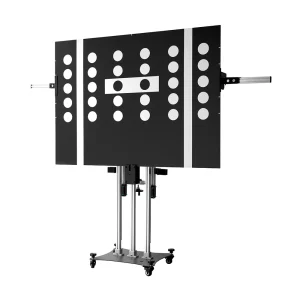


ADAS-B Calibration Tool
● All-in-One Calibration for radar, camera & LiDAR systems
● Multi-Brand Coverage: Benz, BMW, Toyota, Honda, BYD, VW & more
● Foldable& space-saving design for easy storage
● Complete accessory kit with laser & calibration targets
● Compatible with Dtronic, Meta, Langren & Special Inspect systems
● Precision alignment for accurate ADAS calibration
UDIAG ADAS-A vs ADAS-B: ADAS-B’s Main Features
ADAS-B incorporates a foldable main frame with associated calibration accessories. The frame has an adjustable beam and a movable base. The foldable design facilitates easier transport and storage.
The manufacturer’s listed components include:
- Radar calibration set: Capable of supporting the specified adaptive cruise control radar procedures.
- Camera calibration boards: Provide vehicle specific targets for compatible camera systems.
- Laser equipment: assists the technician with positioning and alignment of the calibration equipment.
- Levelling and centring tools: for accurate equipment set up.
- Calibration targets: To meet the requirements for vehicle specific camera calibration.
The product page states that it is compatible with Dtronic, Meta, Langren and Special Inspect. You must confirm the required software, licence and vehicle coverage prior to ordering.
Which ADAS functions can ADAS-B support?
UDIAG has a number of functions which are supported by its ADAS-B system.
- Adaptive Cruise Control (ACC): Assists in maintaining a safe following distance.
- Lane Departure Warning (LDW) alerts the driver when the vehicle is leaving the detected lane.
- Blind Spot Monitoring (BSM): Aids in the monitoring of areas to either side of the vehicle.
- Around View Monitoring (AVM): Supports compatible surround view camera calibration.
- Rear Collision Warning (RCW): Supports relevant rear collision warning systems.
- Parking assistance: supports the specified parking related calibration procedures.
- Pre-collision systems: Supports compatible systems which will require calibration.
The actual procedure will of course vary depending on the vehicle design and the manufacturer’s instructions. LiDAR support does not in any way guarantee that a vehicle will be compatible with every LiDAR equipped vehicle.
See the UDIAG ADAS-B Calibration Tool for more details.
UDIAG ADAS-A vs ADAS-B: Key Differences
The key difference is in the scope of calibration coverage, equipment configuration and workshop flexibility. ADAS-A is focused on a subset of radar applications whereas ADAS-B encompasses a further range of sensor types.
| Feature | UDIAG ADAS-A | UDIAG ADAS-B |
| Main purpose | Radar calibration | Multi-sensor calibration |
| Radar calibration | Yes | Yes |
| Camera calibration | Not listed as a core capability | Yes |
| LiDAR calibration | Not listed as a core capability | Listed by manufacturer |
| Surround-view calibration | Not listed as a core capability | Yes, for supported vehicles |
| Main design | Shared bracket with interchangeable radar targets | Foldable frame with adjustable beam |
| Calibration accessories | ACC reflector, conical target, Doppler simulator | Radar set, camera targets, laser and alignment accessories |
| Main applications | ACC, BSM, LCA, FCR | Radar, camera, LiDAR and surround-view applications |
| Software requirements | Activated ADAS software or valid licence | Compatible diagnostic platform and required software access |
| Best fit | Workshops prioritising supported radar jobs | Workshops needing broader calibration coverage |
This is in accordance with UDIAG’s published descriptions. Always check individual vehicle coverage and package contents prior to purchase.
ADAS Calibration System Comparison: Which Offers More Flexibility?
ADAS-B has the wider documented sensor coverage and more flexible frame. It’s suitable for a workshop that does camera work as well as radar calibration and its additional capabilities could in fact support a broader range of services.
ADAS-A is still the solution of choice for workshops who are looking to stick with supported radar procedures. It’s a three in one system incorporating the essential radar calibration bits in one unit.
Neither system is automatically the better one for every workshop. The right system will be the one that suits the customer vehicles, the software available, the workspace and the expected level of service demand.
UDIAG ADAS-A vs ADAS-B: Pros and Cons
Pros and Cons of UDIAG ADAS-A
Advantages
- It’s a three in one package combining the key radar calibration elements.
- Interchangeable targets support a range of different compatible radar applications.
- The shared bracket makes the equipment configuration a lot simpler.
- Its focused design is ideal for workshops concentrating on radar services.
- Its listed applications are ACC, BSM, LCA and FCR.
Limitations
- Its documented capabilities are in the area of radar calibration.
- It doesn’t have the same sensor list as ADAS-B.
- Software licensing and vehicle compatibility all require prior verification.
- Workshops may require additional kit for camera calibration.
ADAS-A makes sense when radar jobs are the dominant type of work in the workshop. Buyers should confirm exactly what configuration they need for their customer’s vehicles.
Pros and Cons of UDIAG ADAS-B
Advantages
- It has both radar and camera calibration.
- The manufacturer has LiDAR and surround view calibration support.
- Its foldable frame will obviously help with storage.
- Its accessory package comprises alignment equipment and calibration targets.
- It supports a number of the listed diagnostic platforms.
Limitations
- Its wider capabilities may well go well beyond the immediate requirements of a small workshop.
- Technicians will need appropriate training for the various calibration procedures.
- Compatibility is still going to be down to the vehicle and the diagnostic platform.
- Workshops must have enough space to allow the correct positioning of the equipment.
ADAS-B can be more flexible in the situation where the workshop is seeing a wide variety of vehicles. Any additional capabilities only deliver value when the customer actually requires them.
Camera and Radar Calibration System: Why Accuracy Matters
Camera and radar sensors do very different jobs within a modern ADAS system. The camera looks at the visual world and can see things like road markings and traffic signs. The radar looks at the world around the car and can tell you how far away things are and how fast they’re moving relative to the car.
Some vehicles will combine both inputs for use in advanced driver assistance functions. Incorrect alignment will impact the data that these systems use. Correct calibration will restore the sensor alignment to manufacturer specification.
Calibration requirements will vary depending on whether you’ve had a windscreen replaced, had collision repairs carried out or had any of the sensors removed. Some suspension work or wheel alignment can also trigger the need for calibration. The manufacturer’s instructions for that particular vehicle will of course need to be followed.
A suitable calibration frame by itself doesn’t complete the job. You also need compatible diagnostic software, accurate measurements and the right working conditions.
Other Tools Needed for ADAS Calibration Equipment for Workshops
Professional calibration requires more than just the calibration frame and targets. Workshops should have the following kit in place prior to taking on any ADAS work.
| Tool or equipment | Purpose |
| Compatible diagnostic scanner | Reads faults and initiates supported calibration procedures |
| Vehicle-specific software | Provides the required calibration functions and instructions |
| Wheel alignment equipment | Verifies alignment when the procedure requires it |
| Measuring equipment | Establishes prescribed distances and reference points |
| Levelling tools | Helps position the calibration frame correctly |
| Battery support unit | Maintains suitable voltage during procedures when required |
| Workshop space | Provides the specified distance and clearance around the vehicle |
| Technical service information | Identifies manufacturer-specific steps and requirements |
The exact list of equipment will vary depending on the vehicle and the method of calibration being used. Some procedures will require static calibration, some will require dynamic calibration and some will require both. Always follow the procedure specified by the vehicle manufacturer.
Common ADAS Calibration Problems and Solutions
Calibration Fails to Complete
Incorrect target positioning, unsuitable working conditions or incompatible software can all lead to a calibration being interrupted. Check your measurements again and ensure you’re using the correct vehicle specific target. Always check the fault codes prior to repeating the procedure.
The Diagnostic Tool Cannot Start Calibration
The software in question may well be missing the requisite licence or may not have the required function. Check vehicle coverage and make sure the diagnostic platform is capable of carrying out the calibration. Check for any communication faults and follow the software instructions.
Radar Calibration Remains Incorrect
Check the radar mounting points for damage or incorrect installation. Make sure you have the correct reflector, correct target and that you’re using the correct positioning procedure. Sort out any mechanical issues prior to attempting calibration again.
Camera Calibration Fails After Windshield Replacement
Check the camera installation, the windscreen specification and the required target. Check the vehicle position and follow the manufacturer’s calibration instructions. Don’t assume that every vehicle will have the same calibration procedure.
The Workshop Has Limited Space
Measure the available working area prior to buying any equipment. Check the required target distances and frame movement. The ADAS-B’s foldable design can be of assistance in terms of storage but operating clearance is still a requirement.
Never return a vehicle to service with any safety critical calibration faults unresolved. You must follow the manufacturer’s repair and verification procedures prior to completion of the job.
UDIAG ADAS-A vs ADAS-B:
Which system is best for your workshopThe best ADAS calibration system is going to be the one that suits your workshop’s service requirements. Here are a few practical pointers.ns.
Choose ADAS-A if Your workshop does the majority of the compatible radar cal jobs.bsACC, BSM, LCA and FCR applications all match your customer demand.ndYou’re after a focused system with interchangeable radar targets.tsYour current diagnostic platform does support the required procedures.es.
Choose ADAS-B if Your workshop needs radar and camera calibration.esYou regularly service vehicles that require surround view calibration.onYour business has demand for supported LiDAR calibration.onYou need a foldable system with wider range of calibration accessories.esBefore you go and buy either system you must request the most up to date vehicle cover list. You need to confirm the package contents, the licensing costs, the software compatibility, the warranty and the technical support. You then need to compare the purchase cost against the amount of calibration work your workshop is going to be able to sell.llFor expanding workshops there can be additional service opportunities through wider coverage. The return on that though is obviously going to be down to customer demand, the skill of the technicians and the operating costs.ts.

Frequently Asked Question
What is the main difference between UDIAG ADAS-A and ADAS-B?
ADAS-A is focused on a number of radar calibration applications using the three in one configuration. ADAS-B provides radar, camera, LiDAR and surround view calibration for compatible vehicles and hence has the widest documented sensor coverage.
Can UDIAG ADAS-A calibrate camera?
UDIAG’s published ADAS-A specification is all about radar calibration. Camera calibration isn’t one of the core capabilities listed. You need to confirm any additional compatibility directly with UDIAG prior to purchase.
Does UDIAG ADAS-B support radar calibration?
Yes. UDIAG lists radar calibration as one of the core functions of ADAS-B. Its accessory package includes the components required to carry out the supported radar calibration procedures.
Is ADAS-B suitable for a small automotive workshop?
It’s suitable for a small workshop that needs a number of calibration capabilities. The workshop will obviously need sufficient working space and the appropriate diagnostic software. A radar heavy workshop might find the ADAS-A more appropriate.
What is the best ADAS calibration system for automotive workshops?
The best system is the one that suits your vehicles, your procedures and your budget. ADAS-A is the right choice if you’re doing radar focused work. ADAS-B is the one to go for if you need the wider range of camera, radar and the other listed calibrations.
Does ADAS calibration require a diagnostic scanner?
Many calibration procedures will require a compatible diagnostic scanner and software. The scanner will run the procedure, talk to the various modules and check the status of the system. The requirements will of course vary depending on the vehicle and the calibration method.
When should a workshop carry out ADAS calibration?
Follow the manufacturer’s requirements after any relevant repair or sensor replacement. Typical triggers would be a windscreen replacement, collision repair or radar removal. Some wheel alignment or suspension work will also require calibration.
Can one calibration system support every vehicle brand?
No system is going to be suitable for every vehicle or ADAS configuration. It’s very much dependent on the manufacturer, the model, the year, the sensors and the software. Always check the current coverage list prior to taking on a job.
Conclusion: UDIAG ADAS-A vs ADAS-B
The UDIAG ADAS-A vs ADAS-B decision is all about calibration coverage. ADAS-A is a targeted solution for radar calibration applications that are specifically supported. ADAS-B takes it further by including camera, surround view and manufacturer listed LiDAR.
For workshops specialising in radar services ADAS-A may be quite adequate. For a workshop that’s doing a wide range of ADAS work ADAS-B may be the more flexible option. Always confirm vehicle compatibility, software requirements, accessories and working space requirements prior to making your choice.
Explore the official product pages to compare configurations and request a quotation:
Get in touch with UDIAG to confirm your vehicle coverage and calibration requirements. Select equipment that will meet the actual service requirements of your workshop.
Related Post

UDIAG at Automechanika Shanghai 2026: More Than Diagnostics, More Possibilities

TPMS Relearn Tool: How It Works, Types, and How to Choose

UDIAG ADAS-A vs ADAS-B: Differences, Features, Pros and Cons

Best Milwaukee jump starter Alternative: features, specifications, and what to compare

How to Detect EVAP System Leaks Using a Professional Automotive Smoke Machine
