


Introduction
A tire can look fine at first glance and still have uneven or excessive tread wear. A tire tread depth gauge provides a more objective way to check how much tread remains than visual inspection alone. It measures the depth of the grooves and helps identify wear that may not be obvious from the outside.
This guide explains what a tread depth gauge measures, the main types of gauges, how to measure tire tread correctly, common measurement mistakes, and what to consider when choosing a tire tread depth tool for professional or personal use. It also looks at where a digital gauge such as the UDIAG TT300 can fit into a routine tire inspection workflow.

What Is a Tire Tread Depth Gauge?
A tire tread depth gauge is a measuring tool used to determine the remaining depth of a tire’s tread grooves. Depending on the gauge, the reading may be displayed in millimeters or fractions of an inch.
Unlike a quick visual check, a tread depth gauge gives a numerical measurement. This makes it easier to compare tires, monitor wear over time, and identify differences across the tread surface. A gauge is especially useful when the tread still looks acceptable but wear is not even.
Tread depth matters because the tread pattern helps channel water away from the contact area and provides traction on the road. As the tread wears down, the tire has less remaining tread to work with. However, tread depth is only one part of a proper tire inspection. Tire age, inflation pressure, sidewall damage, punctures, cracks, bulges, and uneven wear also need attention.
A tire tread gauge can be useful in many settings. Tire shops can use it during routine inspections and replacement recommendations. Auto repair shops can include tread measurements in broader vehicle inspections. Fleet operators can use consistent measurements to monitor tire condition across vehicles. Used-car inspectors can record tread depth as part of a vehicle condition report. For DIY owners, a compact tire depth gauge provides a simple way to check wear between professional inspections.
Different Types of Tire Tread Depth Gauges
The basic job is the same, but tread depth gauges use different designs. The right choice depends on how often you measure tires, how you record results, and the working environment.
Analog / Mechanical Tire Tread Depth Gauge
An analog or mechanical gauge uses a physical probe and a graduated scale to show the tread depth. It does not require a battery and is usually simple to operate.
This type works well for quick checks and basic tire inspections. It is also easy to keep in a toolbox or service vehicle. The main limitation is readability. Small scale markings can take more attention to read, especially when measurements are taken quickly or under poor lighting.

Digital Tire Tread Depth Gauge
A digital tire tread depth gauge displays the measurement electronically, making the result easier to read at a glance. Many digital gauges also support features such as unit selection, data recording, or wireless communication.
For professional users, the advantage is not simply the digital display. A good digital tire tread depth tool can make repeated measurements easier to read and record. However, a digital display does not automatically mean better accuracy. Measurement performance depends on the gauge design, resolution, calibration, and how the tool is positioned during use.
Quick Comparison: Analog vs Digital Tread Depth Gauge
Feature | Analog / Mechanical | Digital |
Display | Graduated scale | Digital screen |
Battery | Usually not required | Usually required |
Reading | Direct but may require closer attention | Easy to read at a glance |
Data recording | Manual | May support digital records |
Portability | Usually compact | Usually compact |
Best suited for | Basic and quick checks | Frequent inspections and documented workflows |
Neither type is automatically the best for every user. A simple mechanical gauge may be enough for occasional checks, while a digital model can make more sense for a workshop that measures and records tires regularly.
How to Measure Tire Tread Depth
A good measurement depends as much on technique as on the gauge itself. Follow a consistent process so that readings from different tires can be compared.
Step 1: Pre-Inspection Preparation
Park the vehicle on a stable, level surface and make sure the tires are accessible. Before taking measurements, visually inspect the tread and sidewalls for obvious damage, embedded objects, cracks, bulges, or unusual wear.
Do not rely on one measurement to judge the entire tire. The goal is to combine numerical tread-depth readings with a basic visual inspection.
Step 2: Position the Gauge Correctly
Place the gauge’s probe into a main tread groove and keep it properly aligned with the tread surface. The probe should reach the bottom of the groove rather than rest on top of the tread block.
Avoid placing the gauge directly on a treadwear indicator or using a damaged or irregular section as the only measurement point. Correct positioning is important because a small change in probe angle or location can affect the reading.
Step 3: Measure Multiple Points
Measure several points across the tread width. Checking the inner shoulder, center tread, and outer shoulder can reveal whether the tire is wearing evenly.
If the tread shows signs of irregular wear, take additional readings around the circumference of the tire. This can help identify localized wear that a single measurement would miss.
The purpose is not simply to find one number. It is to understand the wear pattern. A large difference between the inner, center, and outer readings may point to an underlying maintenance or alignment issue that deserves further inspection.
Step 4: Record the Results and Analyze the Wear
For professional inspections, record the measurements for each tire and, when useful, note the position where each reading was taken. Consistent records make it easier to compare tires during future inspections.
A low reading should not be considered in isolation. Compare the result with the tire manufacturer’s guidance and applicable local requirements. In the United States, NHTSA identifies 2/32 inch (1.6 mm) as the treadwear-indicator level for tires covered by relevant federal standards, but local requirements and professional replacement recommendations can differ.
Common Mistakes to Avoid When Using a Tread Depth Gauge
The most common mistake is taking only one reading and treating it as the condition of the entire tire. Tires can wear differently across the inner shoulder, center, and outer shoulder. One measurement may miss that pattern.
Another mistake is placing the probe incorrectly. The gauge should measure the tread groove, not the top of the tread block. Measurements should also avoid treadwear indicators when the goal is to determine the actual remaining groove depth.
It is also easy to focus only on tread depth and overlook other tire problems. Cuts, punctures, cracks, bulges, sidewall damage, and significant uneven wear can require attention even when the measured tread depth appears adequate. NHTSA recommends regular tire inspection and specifically highlights tread, sidewall condition, and uneven wear as part of tire maintenance.
Finally, do not assume that a digital gauge is automatically more accurate than a mechanical gauge. Accuracy depends on the instrument and measurement technique, not simply on whether the display is digital.
How to Pick the Best Tire Tread Depth Gauge for Your Business
The best tread depth gauge for tires depends on your workflow rather than the feature list alone. A tire shop measuring dozens of vehicles each day has different priorities from a DIY owner checking one vehicle occasionally.
Measurement Range and Resolution
Check the gauge’s measurement range and resolution before buying. The tool should cover the tread depths you normally encounter and provide readings that are useful for your inspection process.
For professional work, repeatable measurements are more important than simply having a large number on the specification sheet.
Readability and Ease of Use
A clear display can save time when technicians perform repeated inspections. Consider how easily you can read the result while working around a vehicle, and whether the probe can be positioned consistently in the tread groove.
Portability and Durability
A portable tire tread depth tool is useful for mobile technicians, fleet inspections, and service vehicles. For a busy workshop, durability and simple operation may matter more than extra features.
Battery type, charging method, physical size, and resistance to normal workshop conditions are also worth considering.
Match the Tool to Your Workflow
Think about what happens after the measurement. If you only need a quick check, a basic gauge may be sufficient. If your business performs four-wheel inspections and provides customers with inspection reports, a digital tool with data management can reduce manual work.
The important point is to choose a tool that supports the way your technicians actually inspect and document tires.
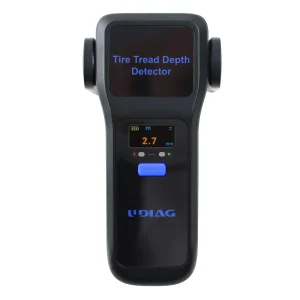
UDIAG TT300: A Practical Digital Tire Tread Depth Gauge
For a busy workshop, the challenge is not simply measuring tread depth. Technicians need quick readings and consistent records across multiple tires.
The UDIAG TT300 addresses this workflow with a compact 137 g design, 0.1 mm measurement accuracy, and a digital display. It can also connect to the TreadX App via Bluetooth for tire position, vehicle, and inspection data.
This makes the TT300 useful for routine tire inspections where technicians need to measure, record, and review tread wear without adding much manual work. It supports the inspection process rather than replacing a complete tire condition check.

Conclusion
A tire tread depth gauge provides a more objective way to assess tread wear than visual inspection alone. For reliable results, measure multiple points across each tire and check for uneven wear.
Choose a gauge based on your measurement needs, readability, durability, and workflow. Most importantly, treat tread depth as one part of a complete tire inspection.
