2025-09-30 by UDIAG
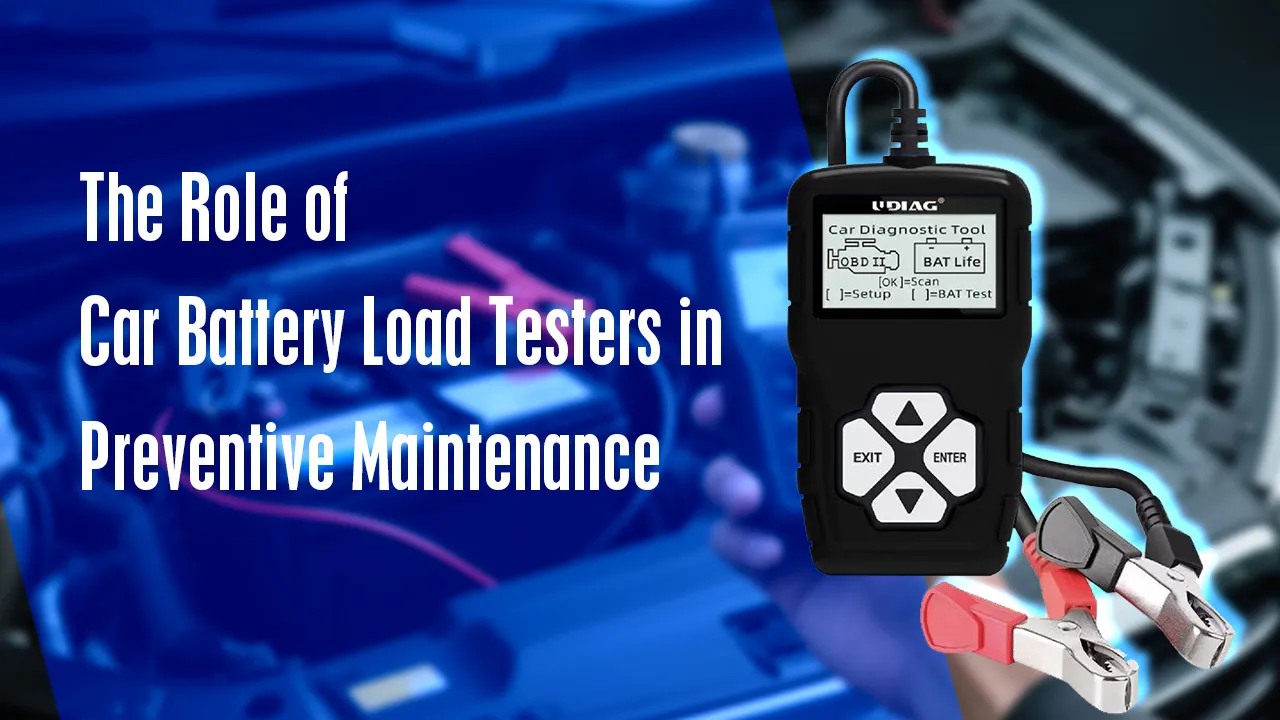
Introduction:
In the modern automotive industry, preventive maintenance plays a crucial role in ensuring vehicle reliability, safety, and performance. Among the many diagnostic tools available, the car battery load tester stands out as one of the most effective devices for detecting hidden battery issues before they lead to unexpected breakdowns. A weak or failing battery can cause serious inconvenience, not only to car owners but also to repair shops that need to address emergency failures. That’s why integrating battery load testing into regular maintenance routines is essential.
What Is a Car Battery Load Tester?
A car battery load tester is a diagnostic tool designed to evaluate the health and capacity of a vehicle’s battery under a simulated load. Unlike a simple voltmeter that only measures surface voltage, a load tester applies a controlled electrical load to the battery and measures its response. This process helps identify internal weaknesses that might not be visible during a basic voltage check. By replicating real-world conditions, the tester reveals whether a battery can deliver sufficient power when the engine demands it most—such as during startup.
Why Battery Testing Is Critical in Preventive Maintenance
Battery-related issues are one of the most common causes of roadside breakdowns. Preventive testing with a car battery load tester provides several advantages:
- Early fault detection: Identifies declining battery performance before complete failure occurs.
- Improved safety: Reduces the risk of sudden vehicle immobilization.
- Cost savings: Prevents costly towing services and emergency replacements.
- Customer trust: For auto repair shops, offering preventive battery testing demonstrates professionalism and increases customer satisfaction.
By incorporating battery load testing into regular inspections, mechanics can extend battery lifespan and reduce unexpected downtime for drivers.
How Car Battery Load Testers Work
The working principle of a car battery load tester is straightforward yet highly effective. The tester connects to the battery terminals and applies a load equivalent to the vehicle’s typical starting current. It then monitors the voltage drop during this test.
- If the voltage remains within the acceptable range, the battery is considered healthy.
- If the voltage drops significantly, it indicates reduced capacity or internal resistance, signaling that replacement may be necessary.
Modern digital testers also provide additional diagnostic features such as Cold Cranking Amps (CCA) measurement, charging system analysis, and real-time reporting, making them indispensable in workshops and service centers.
Benefits for Auto Repair Shops and Fleets
For professional garages and fleet operators, a car battery load tester is more than just a diagnostic tool—it is an investment in efficiency and customer satisfaction. By testing batteries during routine maintenance visits, repair shops can:
- Prevent emergency service calls for fleet vehicles.
- Build stronger relationships with clients by proactively solving problems.
- Streamline workflow by identifying weak batteries before they fail in the field.
This proactive approach reduces downtime for fleet vehicles and ensures higher operational reliability.
Choosing the Right Car Battery Load Tester
Not all testers are created equal. When selecting a car battery load tester, consider the following factors:
- Accuracy and reliability: Ensure the device provides precise readings under various conditions.
- Compatibility: Choose a tester that supports different battery types (AGM, Gel, Flooded, etc.).
- Ease of use: User-friendly interfaces and digital displays simplify testing.
- Durability: A rugged design ensures long-term performance in workshop environments.
Investing in a high-quality tester ensures more accurate results and better preventive maintenance outcomes.
Conclusion
Preventive maintenance is the backbone of reliable vehicle performance, and the car battery load tester is a vital tool in this process. By detecting early signs of weakness and ensuring batteries meet performance standards, this device helps both drivers and repair professionals avoid unnecessary downtime and costs. For any workshop or fleet operation, integrating battery load testing into routine service is a smart, forward-thinking practice.
FAQs
Q: How often should I use a car battery load tester?
A: It is recommended to test the battery at least twice a year, ideally before seasonal changes, to ensure consistent performance.
Q: Can a car battery load tester damage the battery?
No. When used correctly, a car battery load tester applies a safe, controlled load that does not harm the battery.
Q: What is the difference between a voltmeter and a load tester?
A: A voltmeter only measures surface voltage, while a load tester simulates real operating conditions to assess the battery’s true capacity.
Q: Do modern vehicles with AGM or Gel batteries require special testers?
A: Yes. Advanced car battery load testers are designed to handle different battery chemistries and provide more accurate results for AGM, Gel, and standard lead-acid batteries.
Q: Can I use a car battery load tester at home?
A: Yes. Many portable load testers are user-friendly and designed for DIY use, though professional-grade testers offer more advanced diagnostic capabilities.