


Advanced Driver Assistance Systems (ADAS) have become a standard feature in modern vehicles, helping drivers improve safety through technologies such as Adaptive Cruise Control (ACC), Lane Departure Warning (LDW), Automatic Emergency Braking (AEB), Blind Spot Detection (BSD), and Traffic Sign Recognition.
However, as vehicles become more intelligent, ADAS system errors are also becoming increasingly common. A warning message such as “Front Camera Unavailable,” “Radar Sensor Blocked,” or “ADAS Calibration Required” does not always mean a sensor has failed. In many cases, the real cause is inaccurate calibration, incorrect installation, environmental interference, or communication problems between vehicle modules.
For professional repair shops, understanding why ADAS errors occur and how to diagnose them correctly is essential. Replacing expensive sensors without identifying the root cause can lead to unnecessary costs and repeated failures.
This guide explains the most common ADAS system errors, their causes, diagnostic methods, and how professional technicians restore ADAS functions accurately.
Related Reading: For a complete overview of ADAS technology, calibration procedures, and equipment requirements, read our guide: Complete Guide to ADAS Calibration.

Why Are ADAS System Errors Becoming More Common?
Modern vehicles rely on multiple sensors and electronic control units (ECUs) working together. Unlike traditional vehicle systems, ADAS functions depend on precise measurements from cameras, radar sensors, ultrasonic sensors, and vehicle positioning data.
Even a small change in sensor position can affect system accuracy.
For example:
- A windshield replacement can change the camera mounting position.
- A minor collision can alter radar sensor alignment.
- Suspension modifications can affect vehicle ride height.
- Wheel alignment changes can influence camera-based lane recognition.
According to industry research, the number of vehicles equipped with ADAS continues to increase rapidly as safety regulations and consumer demand drive adoption. Many new vehicles now include multiple ADAS features as standard equipment, making ADAS diagnosis an increasingly important capability for automotive workshops.
| ADAS Component | Main Function | Common Error Cause |
|---|---|---|
| Front Camera | Lane recognition, traffic signs, AEB assistance | Windshield replacement, incorrect calibration |
| Radar Sensor | Adaptive Cruise Control, collision warning | Sensor misalignment, impact damage |
| Ultrasonic Sensor | Parking assistance | Sensor blockage or damage |
| LiDAR (advanced vehicles) | Object detection and mapping | Sensor obstruction or system fault |
| ECU Communication | Data processing between modules | Software or communication errors |
As ADAS technology evolves, repair procedures must also evolve. Traditional fault-code scanning alone is often not enough because many ADAS problems are caused by calibration conditions rather than component failure.
Common Types of ADAS System Errors
ADAS failures are usually caused by three major categories:
- Sensor-related problems
- Calibration-related problems
- Communication and software-related issues
Understanding these categories helps technicians avoid unnecessary parts replacement.
1. ADAS Sensor Malfunction Errors
Sensors are the “eyes and ears” of ADAS systems. If cameras or radar sensors cannot accurately detect road conditions, the vehicle will disable related safety functions.
Common warning messages include:
- Front camera malfunction
- Radar sensor unavailable
- Lane assist system fault
- Automatic emergency braking unavailable
Common causes include:
Physical damage
A small collision may not visibly damage the sensor but can change its mounting angle. Radar sensors require extremely accurate positioning because even a small deviation can affect object detection distance.
Environmental interference
Heavy rain, snow, dirt, ice, or blocked camera areas can temporarily affect ADAS performance.
Incorrect installation
After windshield replacement or bumper repair, sensors may require recalibration. Installing a sensor without performing calibration can cause inaccurate system operation.
2. ADAS Calibration Errors After Repairs
Calibration-related issues are among the most common causes of ADAS system errors.
Many technicians assume that replacing a windshield or repairing a bumper only involves mechanical work. However, modern vehicles often require calibration procedures after these repairs.
Examples include:
| Repair Operation | Possible ADAS Impact | Required Action |
|---|---|---|
| Windshield replacement | Front camera position changes | Camera calibration |
| Wheel alignment adjustment | Vehicle reference angle changes | ADAS recalibration |
| Suspension repair | Vehicle height changes | Sensor adjustment |
| Front bumper replacement | Radar mounting changes | Radar calibration |
| Collision repair | Sensor position affected | Complete ADAS inspection |
A vehicle may still start and drive normally after repair, but ADAS functions may operate incorrectly if calibration is not completed.
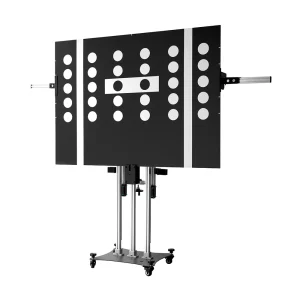
This is why professional workshops increasingly use dedicated ADAS diagnostic tools and ADAS calibration equipment to verify system accuracy after repairs.
3. ADAS Communication and Software Errors
Modern vehicles contain dozens of control modules connected through communication networks such as CAN bus and newer high-speed vehicle communication systems.
ADAS errors can occur when:
- The ADAS control module cannot communicate with other ECUs.
- Software updates change system parameters.
- Diagnostic procedures are interrupted.
- Battery voltage drops during programming.
Typical fault codes may indicate:
- Lost communication with camera module
- Radar sensor communication failure
- Calibration procedure incomplete
- System initialization required
In these situations, clearing the fault code alone does not solve the problem. Technicians need to identify the communication issue and complete the required initialization or calibration procedure.
ADAS Warning Lights: What Do They Really Mean?
An ADAS warning light is not always a sign of a failed component.
Many vehicles use warning messages to indicate that the system has detected conditions outside its operating range.
| Warning Message | Possible Meaning | Recommended Diagnosis |
|---|---|---|
| Lane Assist Unavailable | Camera cannot recognize lane markings | Check camera condition and calibration |
| Adaptive Cruise Control Fault | Radar signal abnormal | Inspect radar alignment |
| Front Camera Blocked | Camera view restricted | Clean windshield area and scan system |
| Calibration Required | Sensor reference data missing | Perform calibration procedure |
| Driver Assistance Limited | System operating with reduced function | Check related modules |
Professional diagnosis requires more than reading the fault code. Technicians must combine:
- Vehicle scan data
- Sensor status information
- Calibration requirements
- Physical inspection
How Professionals Diagnose ADAS System Errors
A reliable ADAS diagnosis follows a structured process.
The first step is a complete vehicle scan to identify communication problems and related fault codes. However, fault codes should be treated as a starting point, not the final answer.
Technicians then verify:
- Sensor mounting condition
- Vehicle alignment status
- Calibration requirements
- Software version
- Live sensor data
For example, if a front camera fault appears after windshield replacement, replacing the camera is usually unnecessary. The correct solution may simply be performing static or dynamic calibration according to OEM procedures.
This diagnostic approach reduces repair costs and improves workshop efficiency.
Why ADAS Calibration Is Critical After Modern Vehicle Repairs
ADAS systems depend on precise sensor positioning. Unlike traditional mechanical components, a sensor can appear physically normal while providing inaccurate data.
A misaligned camera may incorrectly detect lane markings.
A misaligned radar sensor may calculate incorrect vehicle distances.
These errors can affect safety-related functions such as:
- Automatic Emergency Braking
- Adaptive Cruise Control
- Lane Keeping Assistance
Therefore, ADAS calibration is not an optional extra service. It is becoming a necessary part of modern collision repair and vehicle maintenance.
For workshops, investing in professional ADAS calibration tools creates new service opportunities while improving repair quality.

Common Mistakes When Fixing ADAS Errors
Many ADAS repair problems are caused by incorrect diagnostic approaches.
Replacing parts before diagnosis
ADAS components are expensive. Replacing a camera or radar sensor without confirming the cause can increase repair costs.
Ignoring calibration requirements
A new sensor does not guarantee correct operation. Most ADAS sensors require calibration after replacement or related repairs.
Using basic scanners only
Basic OBD scanners can read general fault codes, but professional ADAS diagnosis requires access to advanced system functions, calibration procedures, and live data.
The Future of ADAS Diagnosis: From Fault Codes to Intelligent Calibration
As vehicles continue moving toward higher levels of automation, ADAS diagnosis will become more complex.
Future workshops will need equipment capable of:
- Full-system vehicle scanning
- ADAS module communication
- Calibration guidance
- Live sensor monitoring
- OEM-level diagnostic functions
The ability to diagnose ADAS errors accurately will become an important competitive advantage for automotive repair businesses.
Conclusion: Accurate Diagnosis Is the Key to Solving ADAS Errors
ADAS system errors are becoming more common as vehicles become more intelligent. However, most ADAS problems are not simply caused by failed components.
Correct diagnosis requires understanding the relationship between sensors, calibration, vehicle communication systems, and repair procedures.
For modern automotive workshops, professional ADAS diagnostic tools and calibration equipment are essential for providing accurate repairs and maintaining customer trust.
By moving from simple fault-code reading to complete ADAS system analysis, repair professionals can improve efficiency, reduce unnecessary replacements, and prepare for the future of intelligent vehicle maintenance.
