2025-09-23 by UDIAG
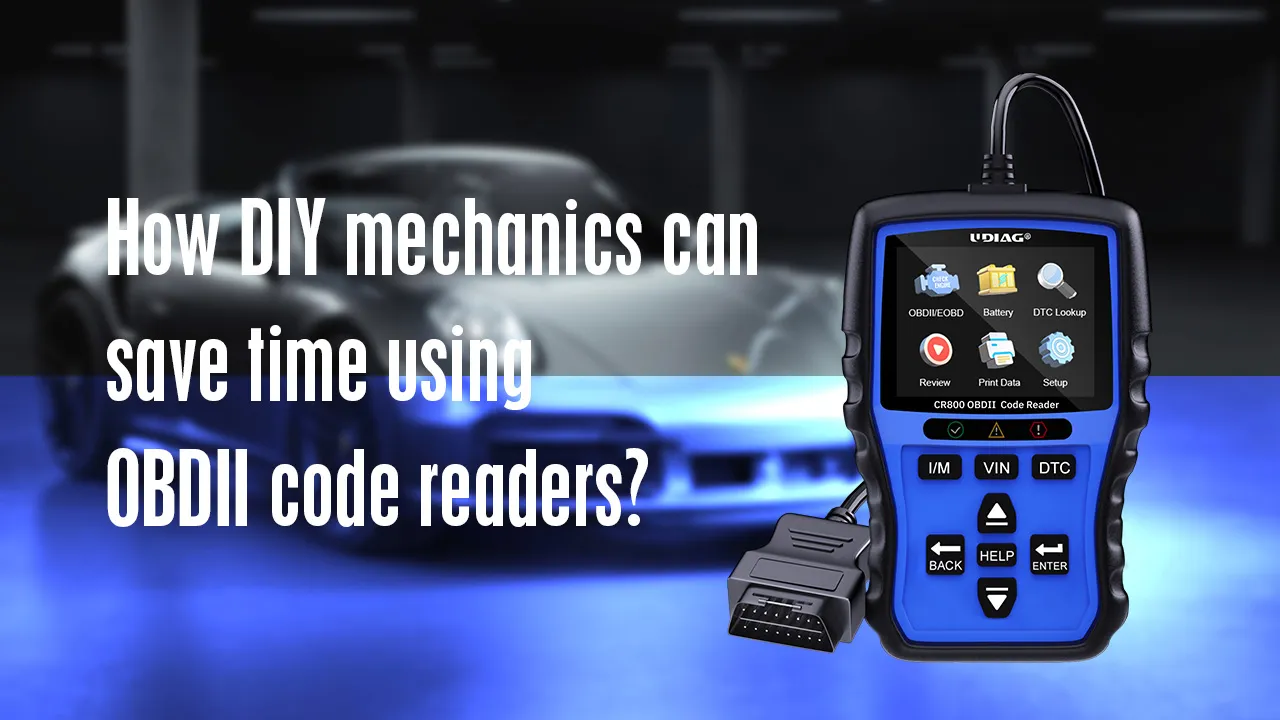
Introduction:
For every DIY mechanic, time is often the most valuable resource in the garage. Whether you are troubleshooting a persistent check engine light or trying to identify the cause of a strange performance issue, efficiency matters. An OBDII code reader is one of the most practical tools that can help car enthusiasts and home mechanics quickly detect, diagnose, and solve problems without wasting hours on trial and error.
In this article, we will explore how OBDII code readers work, why they are essential for DIY mechanics, and the key benefits they bring when it comes to saving time and money.
What is an OBDII Code Reader?
An OBDII code reader is a diagnostic device designed to access the onboard diagnostic system of a vehicle. Since 1996, all cars sold in the United States have been equipped with the OBDII system, which records fault codes related to the engine, emissions, transmission, and other key systems.
By plugging the reader into the vehicle’s OBDII port, a mechanic or car owner can retrieve diagnostic trouble codes (DTCs). These codes point directly to potential issues, eliminating the guesswork and allowing the repair process to begin more efficiently.
Why DIY Mechanics Need OBDII Code Readers
For DIY mechanics, efficiency and accuracy are critical. Here are a few reasons why an OBDII code reader is a must-have tool:
- Faster troubleshooting – Instead of manually inspecting multiple parts, you can instantly identify the system at fault.
- Cost savings – By detecting problems early, you avoid unnecessary replacement of working parts and reduce reliance on expensive workshop diagnostics.
- Confidence in repairs – Knowing the exact issue allows you to repair the problem with precision, minimizing trial and error.
- Wide compatibility – Most code readers support a broad range of vehicles, making them versatile tools for DIY garages.
How OBDII Code Readers Save Time During Repairs
Time efficiency is where the OBDII code reader truly shines. Here’s how it streamlines the repair process:
- Immediate Check Engine Light Diagnosis: Instead of speculating why the check engine light is on, the reader quickly identifies the trouble code so you can target the right component.
- Pre-Repair Verification: Before replacing a part, you can confirm whether the identified issue matches the symptoms, avoiding unnecessary work.
- Post-Repair Confirmation: After fixing the issue, you can clear the codes and run another scan to ensure the problem is resolved, saving time on repeated test drives.
- Live Data Monitoring: Many advanced code readers allow real-time tracking of engine parameters such as fuel trim, oxygen sensor performance, and coolant temperature, giving instant insights into system performance.
Choosing the Right OBDII Code Reader for DIY Use
Not all OBDII readers are the same. When selecting the right tool, DIY mechanics should consider:
- Basic vs. advanced models – Basic readers only show fault codes, while advanced scanners provide live data, freeze frame, and even manufacturer-specific codes.
- Ease of use – A user-friendly interface saves time in navigating menus and understanding results.
- Software and updates – Regular updates ensure compatibility with newer vehicle models.
- Portability – Compact designs or wireless Bluetooth OBDII readers can connect to smartphones, making diagnostics more convenient.
Conclusion
For DIY mechanics, having an UDIAG OBDII code reader is no longer a luxury—it’s a necessity. These tools significantly reduce the time spent diagnosing problems, help avoid unnecessary part replacements, and increase confidence in every repair. With the right code reader, you can transform your garage into an efficient, professional-level workspace.
FAQs About OBDII Code Readers
Q1: Can an OBDII code reader fix problems, or only detect them?
An OBDII code reader does not repair issues—it identifies and reports trouble codes. However, by pointing to the root cause, it saves you time and effort during repairs.
Q2: Are OBDII code readers compatible with all vehicles?
Most OBDII code readers work with vehicles manufactured from 1996 onward. However, advanced features like ABS or transmission diagnostics may depend on the specific reader model.
Q3: What’s the difference between an OBDII code reader and a diagnostic scanner?
A code reader provides basic fault codes and resets them, while a full diagnostic scanner offers more advanced functions, including live data streaming, system tests, and manufacturer-specific codes.
Q4: Is it worth investing in a professional-grade OBDII code reader for home use?
For simple DIY maintenance, a basic reader may be enough. But if you frequently perform complex diagnostics, investing in a professional-grade reader will save more time and money in the long run.